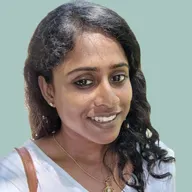


A mix of emotions engulfed me while flipping through the pages of A Better World Is Possible: Global Youth Confront the Climate Crisis.
A year ago, realtors axed a giant Indian Beech tree in the vacant plot next to my residence in Chennai, India. Its sturdy branches cradled nests, and from their safe havens, birds performed an orchestra every morning — a ritual we woke up to. So when I read about solastalgia — the grief of watching the spaces you love degrade environmentally — I nodded in quiet agreement.
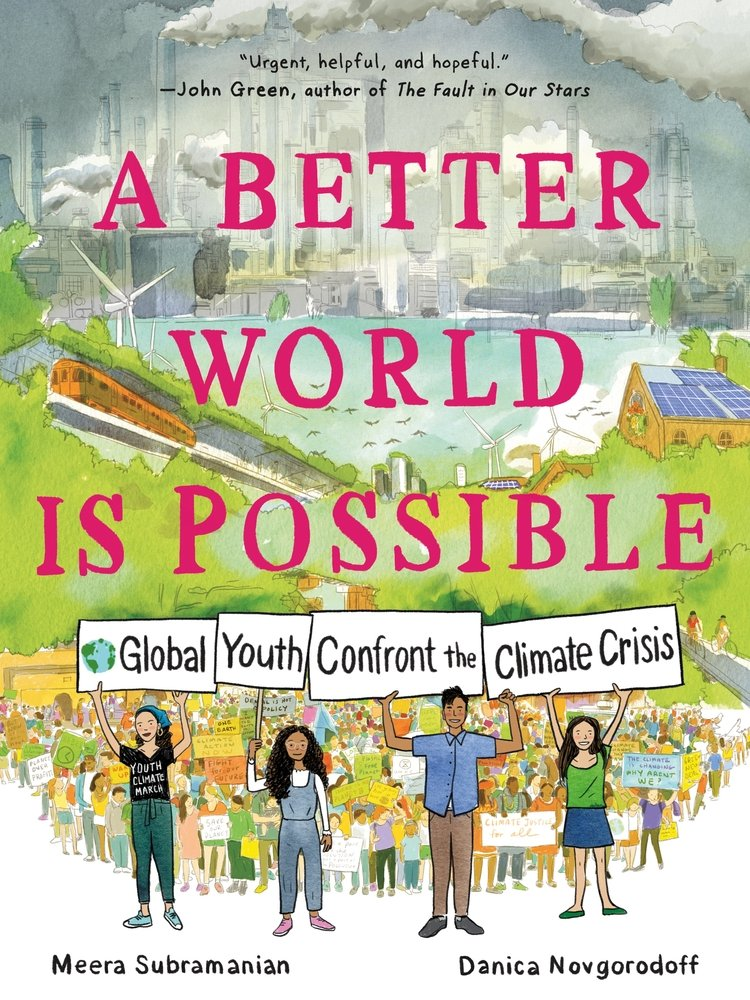
I gasped in fear, reading that 17,000 tree species are at risk due to rapid climate change. I got goosebumps as I moved through the pages describing how 13 youth plaintiffs sued the state of Washington to demand climate action.
I resonated with proposed solutions such as reducing and reusing waste, ideas that are deeply rooted in the Indian way of living.
I felt guilty when I learned that consuming meat-based products is not climate-friendly.
But if there is one emotion that stayed with me throughout the book, it was hope. The book chronicles the journeys of four youngsters — Xiye Bastida, Rebeca Sabnam, Jamie Margolin, and Shiv Soin — who played a pivotal role in making the global youth climate strike possible. At a time when the United States government is increasingly dismissive of climate change, even exiting the Paris Agreement a second time, it feels nostalgic to revisit a moment that pushed climate conversations into the mainstream.
Meera Subramanian, a freelance science and environment journalist, collaborated with illustrator Danica Novgorodoff to create this work of graphic nonfiction. Meera does not go easy on facts, and that makes the book hard-hitting and a much-needed source of inspiration for young adults. Danica’s illustrations are lively and filled with bright colours despite the sombre nature of the subject.
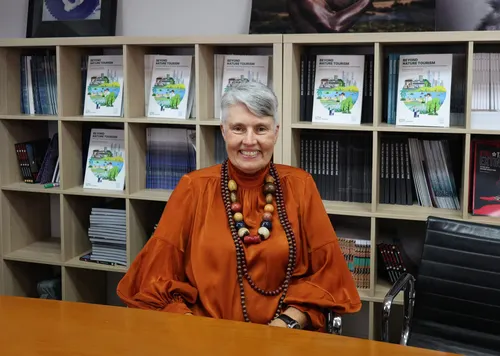
I sat down with Meera on Google Meet to ask some of the questions that lingered with me after reading it.
This interview has been edited for length and brevity.
Laasya: How did the idea for the book take shape, and why did you feel it was important to tell this story specifically for children?
Meera: It was originally the idea of the book’s co-author and illustrator, Danica Novgorodoff. She first imagined an anthology of different comics focusing on connections with nature. But the momentum around the 2019 youth climate activism made her realise this is where the energy is, and she wanted to tell the stories of the young people and their climate activism.
Since climate science was not her background, she decided to bring me in. She participated in the climate strike in New York in late 2019, and we decided to collaborate in 2020.
We wrote it with the idea of a high schooler in mind, but I tried to write it on multiple levels where someone younger could flip through it and maybe skip the complicated parts. Many feel intimidated by understanding climate change, even though it’s fundamentally so simple — more carbon dioxide equals more warming. But the way climate change relates to so many aspects of life on earth can be complicated.
The book tries to lay that all out for people and make it a little simpler to digest, which feels really important. Since the book has been out, some people are reading it to their five-year- olds, and the kids get it. Others working on climate change for years still read it and say that they learned something. I learned a lot by writing it, even though this has been my world for a very long time. It really feels like it is for audiences of all ages.
The Xylom's reporting is supported by hundreds of readers like you. Becoming an annual or monthly member is the best way to help us maintain a steady source of revenue that supports investigations that span months, if not years. Cancel anytime.
Why graphic nonfiction?
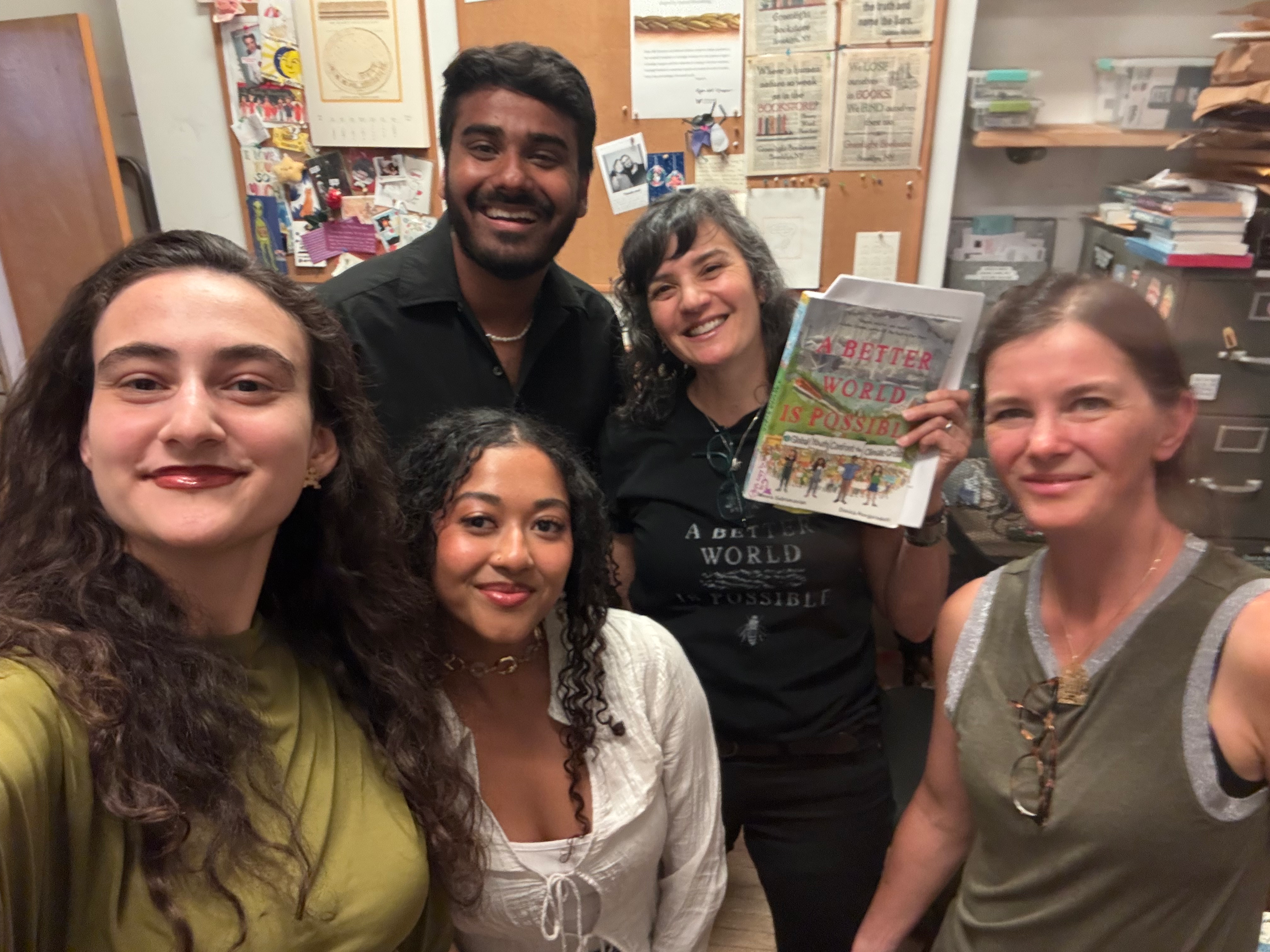
Danica was planning on doing a graphic novel, and I came in as a science journalist to help shape the story that would keep it from being a textbook. I put on my journalist hat and […] researched who organized the event, who was speaking on stage, who was behind the scenes, and who was talking to the press. I watched a YouTube video of the protest, researched newspapers and magazines, and came up with a long list of potential people. We talked to a handful of young people, looking for a diversity of stories. That’s how we found the four youth that we ended up featuring in the book, who were all living in New York at the time of that strike. But one of them is from Mexico, one of them is from Seattle with Colombian roots, one is a son of Indian immigrants, and another activist is from Bangladesh.
The four youngsters behind the September 2019 climate strike form the crux of the story. What made you nail it as the core of the book?
Through these real-life kids, we could get to the heart of showing how much power anyone who decides to work towards climate action has. And they showed — though their backgrounds and experiences of climate change even at young ages [are different] — what is fundamentally a global story.
What was the biggest challenge in the production of the book?
It took us six years to get this book together. When we started the book, the youth were still underage, and going through the legal department at Macmillan took time. So it took a while to finalize the manuscript. Then, Danica did digital line drawings, but every page is hand-watercolored, which took an immense amount of time. There is something so beautiful about what happens with actual watercolors. So different from all digital!
The climax especially had a visual of tiny drops building into a powerful, swirling force. I had goosebumps looking at it. How did the process of creating the book change you and Danica?
I have been doing environmental journalism for 20 years, having reported widely on vulture extinction, biodiversity loss, pollution, and climate-related crises, including the aftermath of Hurricane Sandy. I also wrote a narrative non-fiction book about environmental issues in India.
Being climate-aware is to tackle eco-grief. While researching, Danica was like, “Oh my god, this is such a big problem. I’m scared. I have kids, and what is their future like?” So, we wanted to tackle that head-on. There are these informative interludes [in the book] that are interwoven with stories, and one of them is about eco-grief.
In the process of writing, we recognised that eco grief is a real emotion and handled it by finding a [like-minded] community and trying to make that circle wider. … We could see it playing out with the stories of Xiye, Rebeca, Jamie, and Shiv. In that way, it’s given me hope. While covering stories about the environment is a hard beat, there’s also incredible action happening here.
What is oversimplified in the way adults learn about the climate crisis?
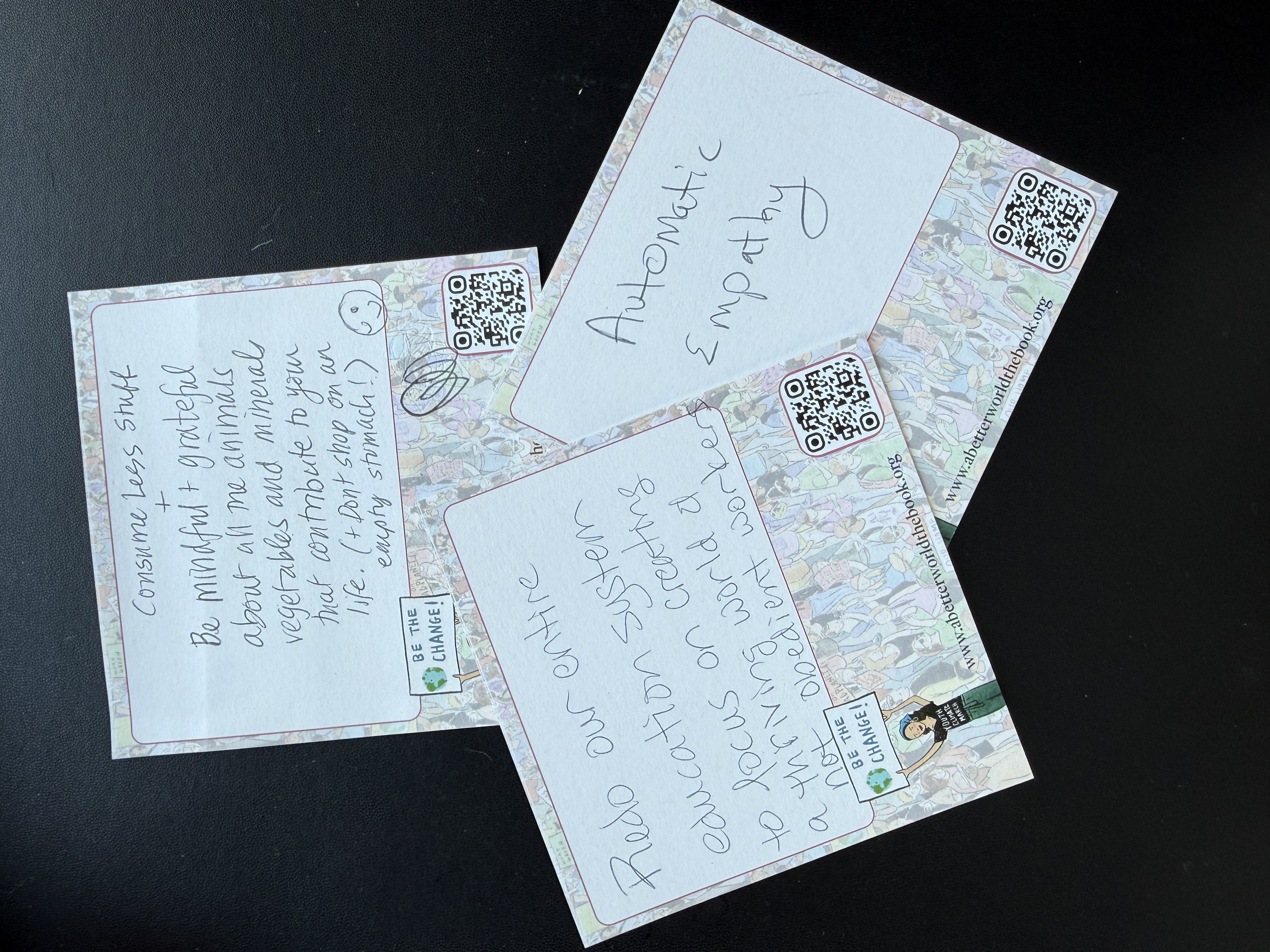
There are many interludes in the book, such as carbon cycles and environmental injustice. Every one of those points could blossom out into a whole independent story. But that would make the book longer. I feel the hardest part was to clearly show the tip of the iceberg, show how it relates to climate change, and then plant a seed, so if it interests people, they would learn more [on their own].
How does religion play into climate activism?
I think it was the moment of energy leading up to the Paris Climate Accords that there was a real recognition that the climate crisis was real, and that it was no longer a faraway problem. People were feeling the effects of extreme weather closer to home. People within religious communities recognised it, too, and pushed for action. That’s true everywhere, even though in the U.S., Christianity has been hijacked by the political right, overlapping with climate denialism and resulting in backsliding on climate action.
It started to happen during the first Donald Trump term. Every religion recognizes that if you believe that a higher power created this world, then it’s our role to take care of it. It might not be the dominant part, but it is present in every religion. Climate change can be perceived as a technical problem since we have to transition our entire energy system away from fossil fuels, but the decision to make those changes is ethical and moral. Religion is drawing on stories from time immemorial, and it really opens the door to the question: what do we owe the future?
How do you remain hopeful when the political climate in the U.S. is in total denial of climate change?
The political discourse makes it seem like nobody cares. But social science surveys, [including] Yale's Program on Climate Communication, show that more and more people are alarmed about climate change. So people are concerned; they are experiencing events that totally change their perception. Even many conservative people who vote for the right don’t deny climate.
We also tried to connect the dots about how these global movements are feeding each other. Just as India led with the tree-hugging [Chipko] movement, which later evolved in the U.S. into forms like tree-sitting and forest defense activism. The momentum for the climate strikes partly began with Greta Thunberg from Sweden. We’re all learning from each other.
Is the feedback different from the adults in the room?
I haven't heard it from any young people yet, but some adults told me that the book can be used as a conversation starter. We are hoping that it’ll get adopted in schools because it’s fact-checked and researched and can be used as an actual learning tool. But then I also think there must be kids out there who care [about climate] and maybe their parents don’t, and this could also be a conversation starter.
Looking back from where we currently stand, how has our collective memory of the 2019 youth climate protest evolved?
It’s really challenging. Protesting now in the U.S. is even harder than it was six years ago — American citizens getting shot by ICE agents in Minnesota, crackdowns on campuses, which are usually a place for students to safely express their concerns. We end the book talking about solutions. Protest is just a vocal and visual way of climate action. But there are so many other ways that you can find community and make changes. Hopefully, we convey in the book that if something is more dangerous or threatens your academic prospects or your job prospects, there are so many other ways that you can be active.
The Xylom is an independent, nonprofit website whose work is written, reported, and owned by human journalists. Our intended audience is real people, not AI scrapers, bots, or a search algorithm; we don't take money from fossil fuel companies, lobbyists, or politicians either. Become a member to access exclusive events and free swag.
In 2025, we’ve seen the Trump administration and other regimes target youth dissent. For example, Rümeysa Öztürk, a Turkish Ph.D. student and former Fulbright scholar, was detained by ICE after co-authoring a campus newspaper op-ed about Gaza. Is A Better World Really Possible?
Here’s what I’m holding on to. Like in the book, we talk about physical tipping points within climate change. I also recognize there are tipping points in the socio-cultural world that we never quite know when they're going to happen. Things can feel immutable, and then suddenly it changes. I wrote in the book about the travel program I did in 1989. None of the history professors on the ship had any idea that the Berlin Wall was going to fall.
And it was happening at the ground level, almost underground — and then it swelled, people came together, and things began to change. Will we … have more authoritarians in the world? Maybe, or maybe everybody will get tired of that, and things will suddenly change. I remember thinking, okay, we didn’t name it A Better World Is Probable. We called it A Better World Is Possible.
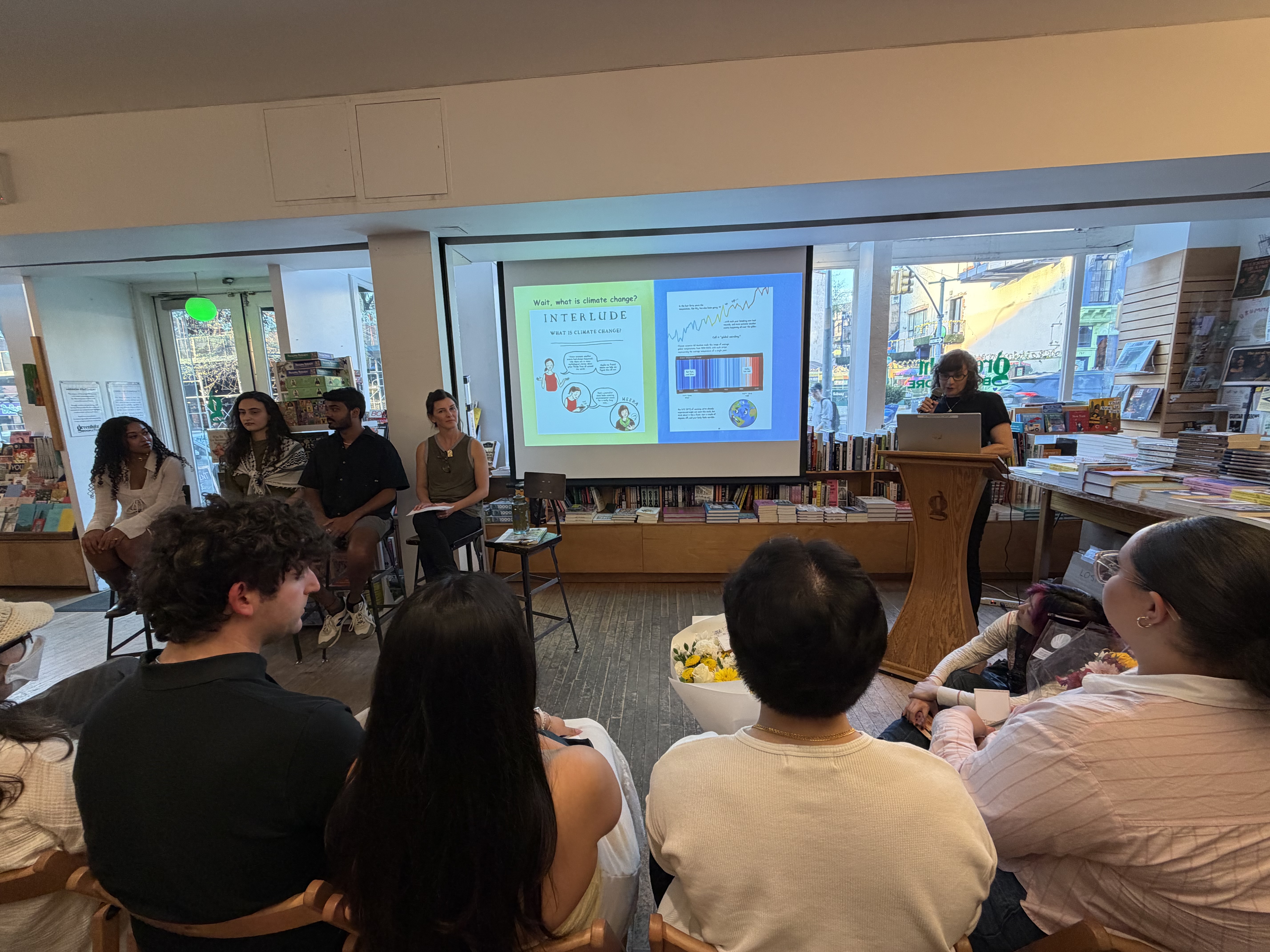
The Xylom has a relationship with Bookshop.org . If you make a purchase through the Bookshop links on our site, we may earn an affiliate commission.