Over a decade ago, Wang Xiaoyong set out to conserve the corals in the waters off Shenzhen, southern China.
He co-founded a local group called DiveForLove and organised volunteers to survey reefs, remove litter, and collect and replant corals broken by storms. Protecting corals off the coast of Shenzhen, a highly urbanised city, is an urgent task. In the 1980s, coral covered approximately 70% of nearby Dapeng Bay. It was below 30% by 2000, which mirrors the bay’s current coverage levels.
Coral bleaching, which occurs due to heat stress and oceanic conditions tied to weather systems, is called so because corals lose their colour as they expel symbiotic algae. Dapeng Bay experienced a particularly severe bleaching event in 2024, when, according to Wang, 60% of local corals turned white. Corals can survive bleaching, but if temperatures are too high for too long, they die. Other species that depend on coral reefs for food and shelter soon vanish.
“It’s truly heartbreaking,” says Wang.
A massive study released earlier this year, drawing on 21.1 million observations from over 36,000 reefs in 124 countries, found that hard coral cover is falling globally. It says the gap between major global bleaching events has narrowed to roughly five to six years, which is often not enough time for reefs to recover. And this month, more reef research was released, finding that approximately 44% of reef-building coral species face “an elevated relative risk of extinction”. The study, by marine scientists from across the globe, assessed 774 of these species, all listed as endangered by the International Union for Conservation of Nature.
The ocean is setting new heat records with alarming rapidity, and the current El Niño phase is set to drive temperatures even higher. Corals face a bleak, bleached future.
This is not only about the deaths of marine invertebrates, however. The loss of corals jeopardises the income, food security, and coastal protection of hundreds of millions of people worldwide, who depend on their local reefs.
Wang says his group’s focus has shifted from coral restoration to marine nature education in recent years, in the hopes that this will ultimately lead to better protection for the ocean.
“In the context of global climate change, our local efforts, to put it bluntly, may seem insignificant. But how could we simply give up because of that?” he says. “We are hoping to sow seeds in people’s hearts.”
Kenya: Building for Resilience, and for Fishing
Where the Indian Ocean meets the village of Kuruwitu on Kenya’s coast, the fisher Katana Ngala has also been trying to restore his local reefs.

He has spent two decades building underwater coral nurseries to help piece fragmented corals back together in the marine protected area here. The 30-hectare zone was established after the 1996 El Niño event to rebuild fish populations and protect the damaged and degraded reef.
What is El Niño?
El Niño is a climate pattern in which the surface water of the east-central tropical Pacific Ocean warms to significantly above average. This affects rainfall patterns and weather across the world, raising temperatures globally during its duration. El Niño is part of a phenomenon called the El Niño-Southern Oscillation (ENSO); the opposite, cooler phase is called La Niña. El Niño events do not occur on a regular schedule, but on average appear every two to seven years.
(Taken from Dialogue Earth’s climate change glossary)
“Several years ago, before reclaiming corals, we suffered a lot because we depended on fishing and there were none,” Ngala tells Dialogue Earth, from a hammock where he is watching the ocean. “I am happy that now fish and corals are back in the waters because of our efforts.”
Ngala says the ocean is depended upon by men and women, fishers and fishmongers, and even children who use rods to fish. He knows the risk that the high temperatures now being seen in many places can bring: “Coral depends on warm temperatures between 25-30C. More than that, the corals will die and bleach.”
Although local actions cannot deal with the warming waters caused by global greenhouse gas emissions, experts say reducing fishing pressure, cleaning up water, and supporting reefs via projects such as Ngala’s can help reefs cope. Activities that improve coral health give them a better chance of surviving when temperatures do spike.
Our local efforts may seem insignificant. But how could we simply give up because of that?
Wang Xiaoyong, co-founder, DiveForLove
Juliet Furaha Karisa is a coral reef ecologist and conservationist from the Kenya Marine and Fisheries Research Institute. She tells Dialogue Earth that Kenya is using protected areas, community-led conservation, restoration, and other tools to help its reefs.
“Government institutions, scientists, conservation organisations, counties, communities, women, and young people are undertaking strong and increasingly coordinated action,” says Karisa.
“However, restoration and local management cannot cool the ocean. Our national efforts must be matched by rapid global reductions in greenhouse gas emissions if Kenya’s coral reefs are to survive in a functioning form.”
The Xylom's independent, human-powered reporting will never be put behind a paywall, thanks to the support of readers like you. Please make a tax-deductible donation now to keep our newsroom going.
Bali: Protecting the Reef, and Tourism Income
As part of the coral triangle, the Indonesian island of Bali plays a crucial role in coral reef conservation.
The coral triangle spans six nations: Indonesia, Malaysia, the Philippines, Papua New Guinea, the Solomon Islands, and Timor-Leste. This region is a global centre for coral biodiversity, hosting 76% of the world’s coral species. More than a third of the region’s 350 million human residents lead lives that are dependent on the ocean.
In Bali, these reefs drive significant tourism income.
“Communities are beginning to realise how important coral reefs are for the sustainability of marine life and for themselves,” says Pariama Hutasoit, an Indonesian marine conservationist and chair of the Coastal and Marine Biodiversity Foundation (Bali Blue Harmony). “Fishermen can more easily catch fish, and they also earn additional income from marine tourism.”
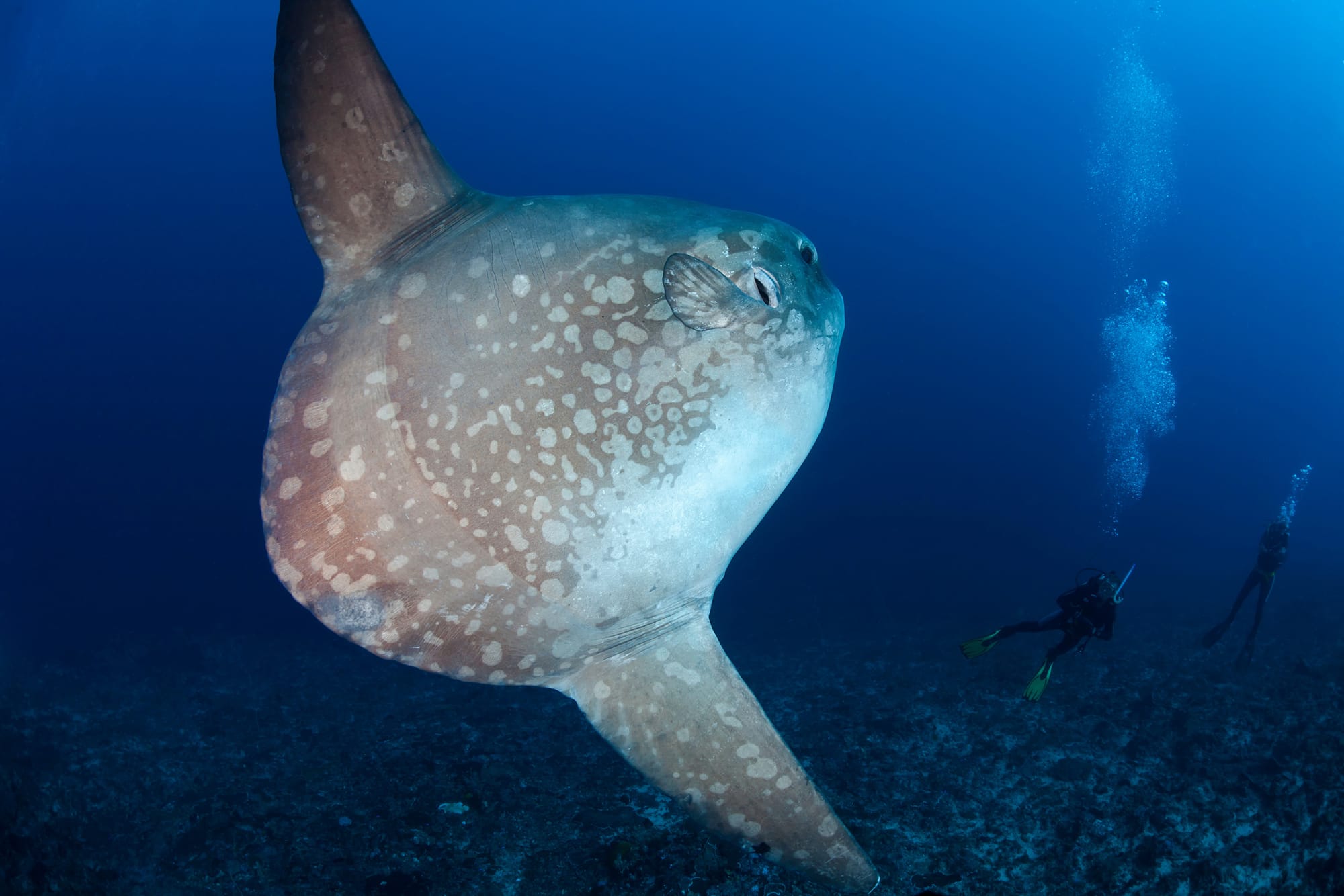
One of those communities is on Nusa Penida, a short ferry ride from Bali. The island is known for its spectacular scuba diving and congregations of mola mola (ocean sunfish) and mantas.
In 2010, I Nyoman Karyawan, a native of Nusa Penida, became worried about seaweed cultivators damaging local reefs to clear space for their crops. He started a project reseeding corals.
Now, like many people who love and depend on corals, he is facing a problem far larger than the local pressures he set out to alleviate: “Global warming … yes, usually the impact is felt worldwide. We seem to have to accept it and it is difficult to prevent it if it is only us.
“However, to this day, we continue to strive to care for and plant them as well as possible without stopping. Because these coral reefs are part of the natural chain and the livelihood of the people here.”
That natural chain is under pressure as never before. If it breaks, it will not just be corals that suffer.
Mexico: Reefs, and Locals, Are Stressed
In the state of Quintana Roo, Mexico, coral reefs attract droves of tourists who want to see reefs, sharks, rays, and turtles.
“For those of us living in this region, the health of the reef is inextricably linked to fishing, tourism and the wellbeing of our communities,” says Nadia Rubio-Cisneros, a researcher at Mexico’s Autonomous University of Nuevo Leon (UANL) based on the island of Cozumel in the state. Nadia also directs Sustainable Seas Science and Conservation (MSCC), a research and education group that works to protect sharks that rely on local habitats.
Caribbean reefs generate billions in tourism and fisheries revenue every year but are some of the most degraded in the world. As well as bleaching, they face problems with disease, huge influxes of brown algae that can smother corals, plastic pollution, damage from overtourism, and massive hotel developments that degrade water quality.

“Compared to 15 or 25 years ago, the reef is badly damaged. If you spot a barracuda, a gray ray [southern stingray], or a turtle while diving, it’s a cause for celebration,” says diver Luis Fernando Amezcua, a resident of the coastal village of Mahahual, south of Cozumel. “Some longtime workers do feel a bitter sense of dismay seeing the coral reefs where they once worked literally vanish from one month to the next.”
Rosa Elisa Rodríguez-Martínez is a National Autonomous University of Mexico (UNAM) reef researcher based in Puerto Morelos, 300 km up the coast from Mahahual. She says many species once common in the Caribbean, such as types of agaricia and porites, have not been seen in years, or only in “greatly reduced” numbers.
Many of the locals and experts who talked to Dialogue Earth hope local efforts can buy reefs time for the global emissions reductions that will eventually curb global warming. But Rodríguez-Martínez is pessimistic.
The Xylom is an independent nonprofit. We have no owners or shareholders, no corporate interests, and no government contracts. We have no paywalls. Everything we publish is free. Join our community of members and cancel anytime.
She fears it is likely that reefs located far from human-impacted coastlines and in cooler, deep waters will be the only ones to survive:
“Given the trends of rising ocean temperatures, eutrophication, and marine pollution, it seems impossible for coral reefs to have a chance at recovery within this millennium. Perhaps, thousands of years from now, the survivors could repopulate the seas if conditions once again become suitable for coral growth.”