Unseen: The Impact of Trump’s Draconian Immigration Policies on Asian Americans
This story is produced by Mindsite News, a nonprofit news outlet reporting on mental health, and co-published by The Xylom. It is part of an ongoing series supported by the Nova Institute for Health. Subscribe to the MindSite News Daily newsletter here.
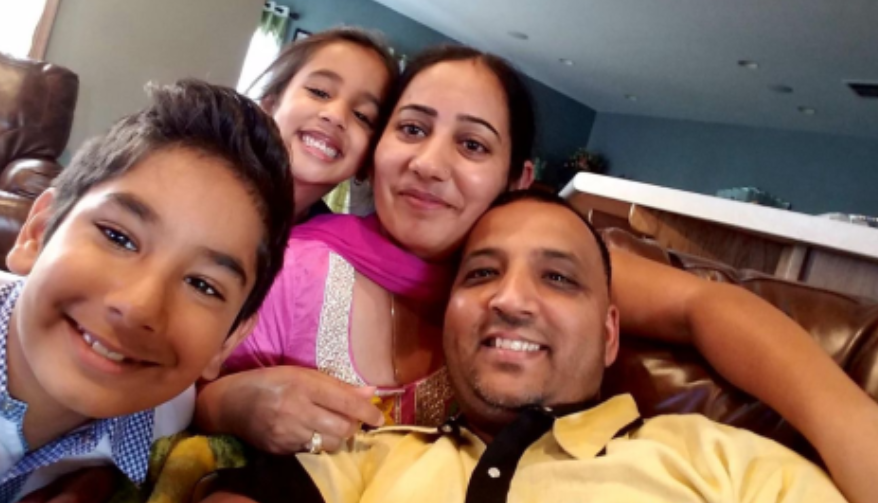
On an unseasonably warm afternoon in mid-September, high school senior Kirat Virk got in his car, picked up a friend, and headed to Carroll High School for the second football game of the season.
The team was poised to make it to the state semifinals; the bleachers were full and the crowd raucous. “Everyone was so loud,” Kirat recalled. “And, for the first twenty minutes, I was having so much fun.” Then, reality came rushing back. “I got a terrible feeling. I felt guilty that my mom was home alone. I felt guilty that my dad wasn’t going to be there, either. I didn’t want my dad to think that I didn’t care that he’s in there and I’m out here having fun.”
“In there” means in detention. For months, Kirat’s father — a 48-year-old business owner who has lived in the United States since he was a teenager — was one of roughly 66,000 people (a record high) held in U.S. Immigration and Customs Enforcement (ICE) custody, according to federal data obtained by CBS News. Then, in late 2025, he became one of the more than 605,000 people the U.S. government said it has deported since the start of Trump’s second term.
Kirat is one of thousands of children carrying an invisible weight: anxiety for his parent’s well-being and the fear that they may not come home. These sons and daughters of immigrant, mixed-citizen, and noncitizen families — some of whom were born on U.S. soil, others who arrived as children — are being harmed by increasingly punitive immigration enforcement efforts. Psychiatrists say this campaign is causing an epidemic of fear and trauma, which not only impacts children’s physical and emotional well-being today but has grave implications for their future.
Trauma That Burrows Into the Brain and Body
Latino families have borne the devastating brunt of ICE detainment and deportation — and the research reflects it. But the children of Asian immigrants are increasingly, and acutely, affected. Asians are the only ethnoracial group in the United States that is majority foreign-born. Seventy-five percent of Asians ages 14-24 were born outside of the country or have a parent who was born abroad, versus 49% of Latinos and 23% of the general U.S. population.
Asians are heavily represented across the continuum of immigration status — from refugees, temporary visa holders, and permanent residents to naturalized citizens — and are the nation’s fastest-growing unauthorized population, according to a report by Asian Americans Advancing Justice. The report also notes that one in three noncitizen Asian Americans is undocumented, and that some 800,000 Asian American children live with at least one undocumented parent.
“Given the data and what’s going on, it’s quite important to highlight Asian Americans in relation to immigration policy,” said Dr. Austin Nguy, a third-year psychiatry resident at UC Riverside. “We know sweeping immigration policy supportive of ICE detention causes harm to all children.”
As the Trump administration implements its executive order to “protect the American people under invasion,” children have become collateral damage. Parental separation is the most damaging and potentially enduring trauma, triggering hardships that were previously unimaginable. Separation not only disrupts parent-child relationships, but it also acts as a “toxic stressor,” triggering strong and prolonged activation of the body’s stress response.
Toxic stressors change how the body manages stress over time and disrupt cognitive processes and emotional regulation. Research shows children and adolescents who experience this kind of separation can face higher rates of anxiety, depression, post-traumatic stress disorder, and severe psychological distress. IQ scores tend to be lower and immune systems are more likely to be compromised.
In a comprehensive study published in JAMA Pediatrics of more than 500 Latino middle-schoolers — the majority of whom have U.S. citizenship — researchers found that adolescents with a detained or deported family member were more than twice as likely to have suicidal thoughts and about three times as likely to use alcohol. They were also more likely to show problematic behaviors, including aggression and skipping school.
The impacts of these policies do not disappear. The trauma burrows in the brain and body and can reverberate into adulthood. “Evidence for serious risks during the early and middle adolescent years has implications for dropping out of school, criminal activity, and suicidality occurring later in life,” researchers concluded in the JAMA Pediatrics study. Adverse early experiences have also been linked with elevated rates of cancer, heart disease, and lung disease, and a host of mental health challenges, including anxiety, depression, and eating disorders.
“We Get a Little Bit of Hope and It’s All Crushed”
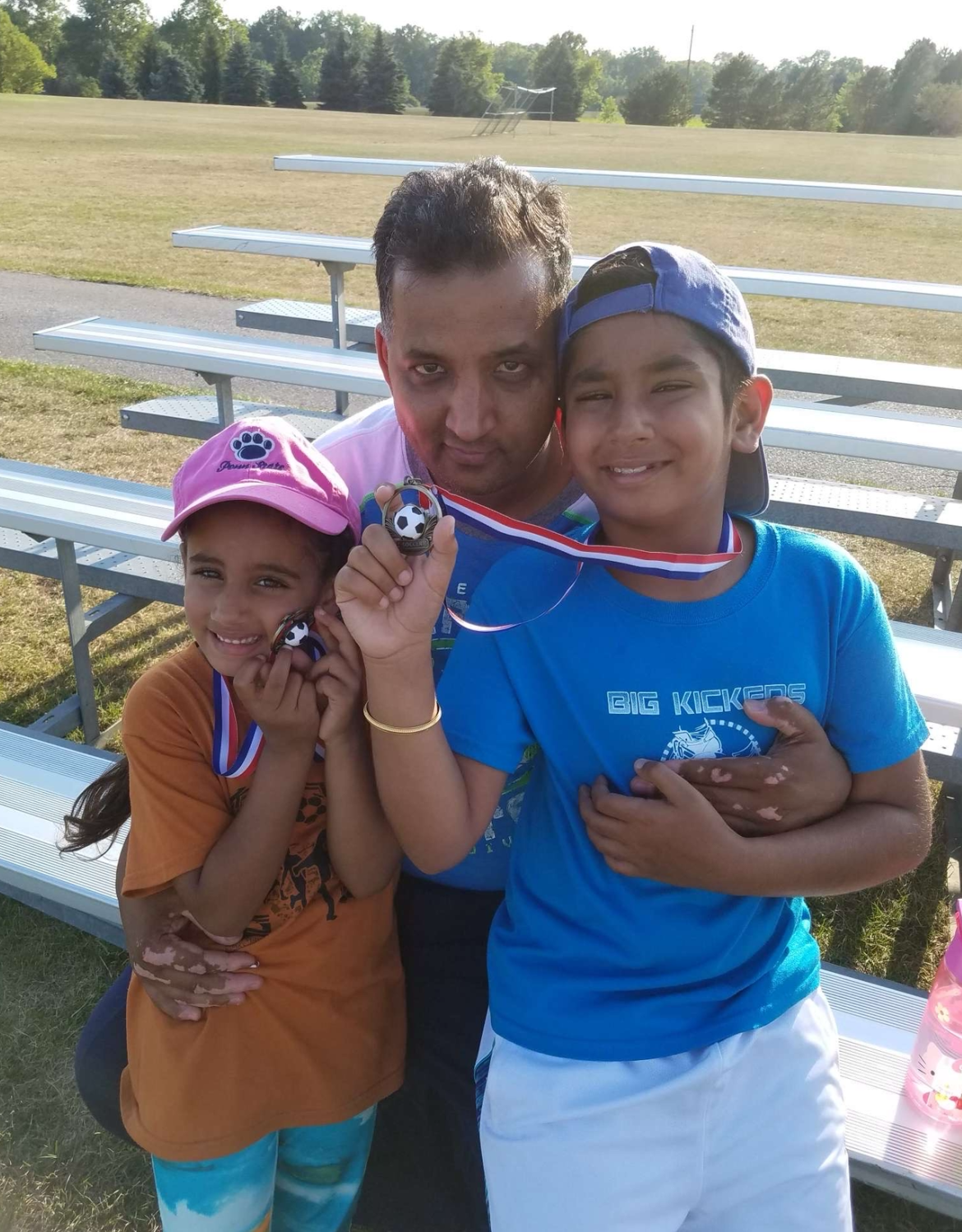
The last time Kirat saw his father, Paramjit Singh, was at Chicago’s O’Hare airport. Paramjit handed him the fanny pack that held his credit cards and papers and placed his rings and kara — the steel bangle that reflected his commitment to his Sikh faith–into his cupped hands. He pulled his son into an embrace and told him to stay safe and take care of his mom.
Paramjit and Kirat were returning from India to their home in Northeastern Indiana. They had spent the last few weeks visiting relatives — drinking chai, sitting with the aunties, doing the things Indians visiting loved ones typically do. It was the first time they had traveled without the rest of the family, a father and son on their first adventure. “We didn’t even watch movies, really,” Kirat said. “We just talked and talked and laughed.”
Paramjit, a green card holder, immigrated from India to Indiana at age 17, the same age his son is now. On their return, he got pulled aside for additional screening. That wasn’t unusual. He had a decades-old conviction for using a payphone without payment, a charge his lawyer calls a “minor infraction” that, in 2023, was reduced to a misdemeanor.
Paramjit and Kirat, a U.S. citizen, were escorted to a nondescript room in the corner of the airport. “My dad had been through this so many times,” Kirat said. “I thought everything was normal.”

But this was their first trip since Trump resumed office. As one hour became two, Kirat felt the weight of the conversations they’d had before leaving, when news of ICE’s expanding enforcement began to spread. “I was stressed out even before we left for India,” he said, “and told my dad, ‘It’s dangerous, let’s not go.'”
Kirat’s fear — known as “anticipatory anxiety” — are concerns about situations that could arise, commonly focused on situations that someone can’t fully predict or control. It is a kind of pre-traumatic stress, a fear that has become pervasive in immigrant communities and increasingly common in mixed-status families that include family members who have citizenship and those who do not.
“Despite being citizens, (children) are deeply affected by the precarious legal status and systemic exclusion faced by their caregivers,” Dr. Nguy and his colleagues wrote in a Special Report on U.S. Immigration Policy and the Mental Health of Children and Families published in Psychiatry Online. And, he added in an interview, “the threats or the anticipation of something happening is experienced (in the body) at almost the same level as the separation itself.” A 2024 study found these fears lead to school absenteeism, academic disengagement, and heightened emotional distress.
Children and teenagers are particularly vulnerable because the coping mechanisms that could help them manage those potential events are not fully developed. Stress and anxiety have increased, Texas-based school psychologist Dr. Asha Unni explained, not only through direct exposure to raids and detentions but through shattering accounts from peers and social media.
“They’re holding this feeling of, ‘When is it going to be the day that my family is directly affected? When am I going to hear about my friend? When am I going to hear about my relative?’” she said in an interview.
The Xylom is an independent, nonprofit website whose work is written, reported, and owned by human journalists. Our intended audience is real people, not AI scrapers, bots, or a search algorithm; we don't take money from fossil fuel companies, lobbyists, or politicians either. Become a member to access exclusive events and free swag.
After a seven-hour wait, officers told Kirat that his father would be detained overnight. They did not ask the teenager traveling alone, who had been awake for close to 18 hours, if he had a safe place to stay. They simply told him to collect the family’s suitcases and call his ride.
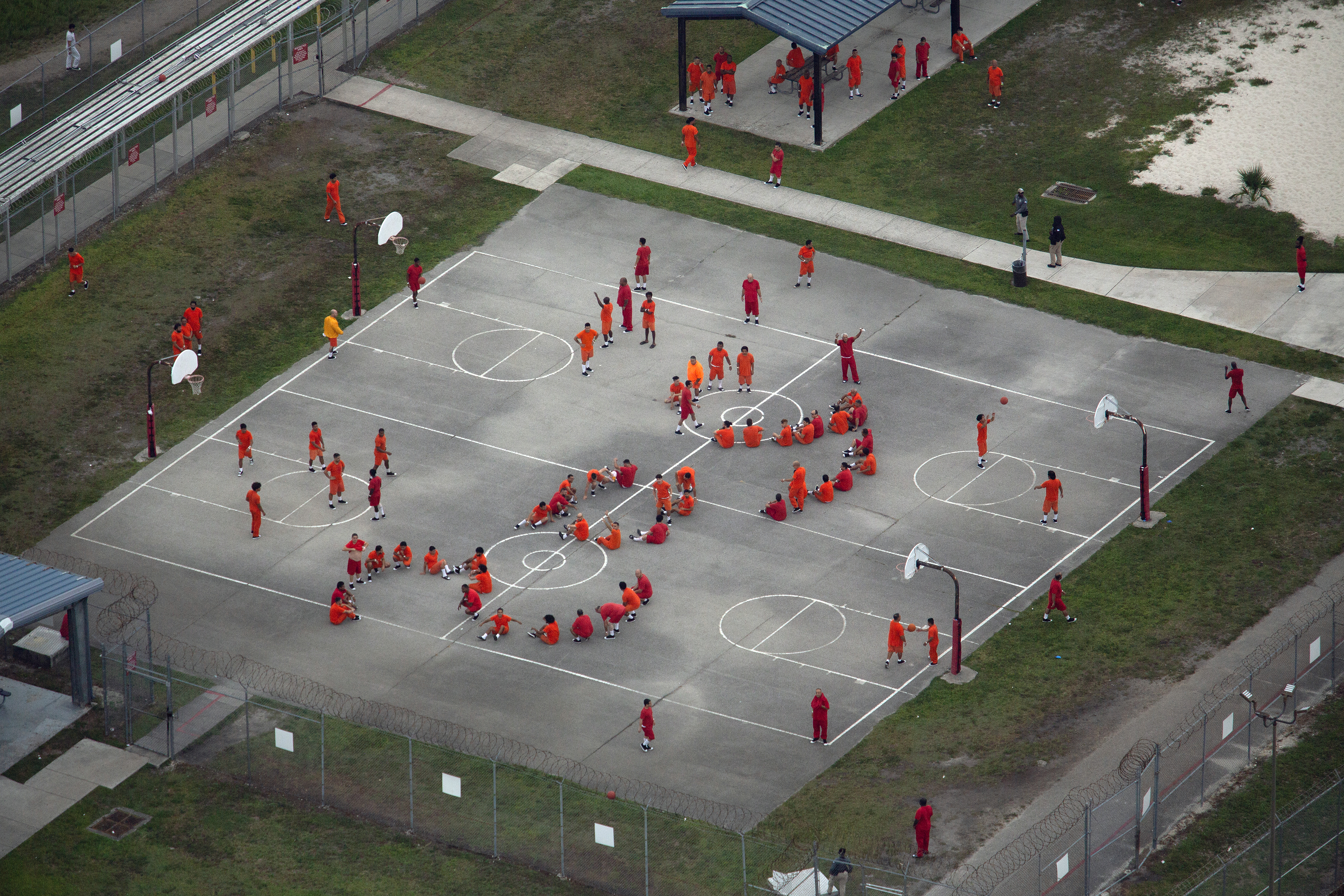
While in custody, Paramjit was taken by ICE to a hospital emergency room for a health crisis—one his family only learned of weeks later when they received a hospital bill. After the ER visit, Paramjit was moved back to airport detention and, eventually, to a northern Kentucky jail. It is one of many jails and prisons contracted to detain people on behalf of ICE, blurring the distinction between detainee and inmate, detention and incarceration. The facility is paid $88 a day per ICE detainee, roughly 2 ½ times the amount it receives to house an inmate.
“If ICE catches people who have done super-bad crimes, obviously they are deportable,” Kirat says. “But there are a lot of people who have small cases from 10-, 15-plus years ago. My dad was young. He made a stupid mistake. He’s been here for 30 years. He has a nice home, two kids, over 300 employees in his gas stations. They are bending the rules to kick people out of the country. It’s not fair.”
Evolving immigration policy, including the Laken Riley Act (the first piece of legislation Trump signed upon re-entering office), has expanded the definition of “conviction,” which can have significant consequences for green card holders. “Many old offenses that don’t count as convictions in criminal court do count as convictions in immigration court,” the National Immigration Law Center explains in its guide.
Paramjit has a heart condition and is recovering from a pituitary adenoma, a brain tumor linked to partial blindness. The medical assessment he was supposed to have in October was cancelled and repeated requests for humanitarian parole on medical grounds have been denied. “His sight is worsening again,” Kirat says. “And we don’t know if it’s growing back. He is a really strong guy, but I’m not sure he’s safe. That keeps me worried all the time.”
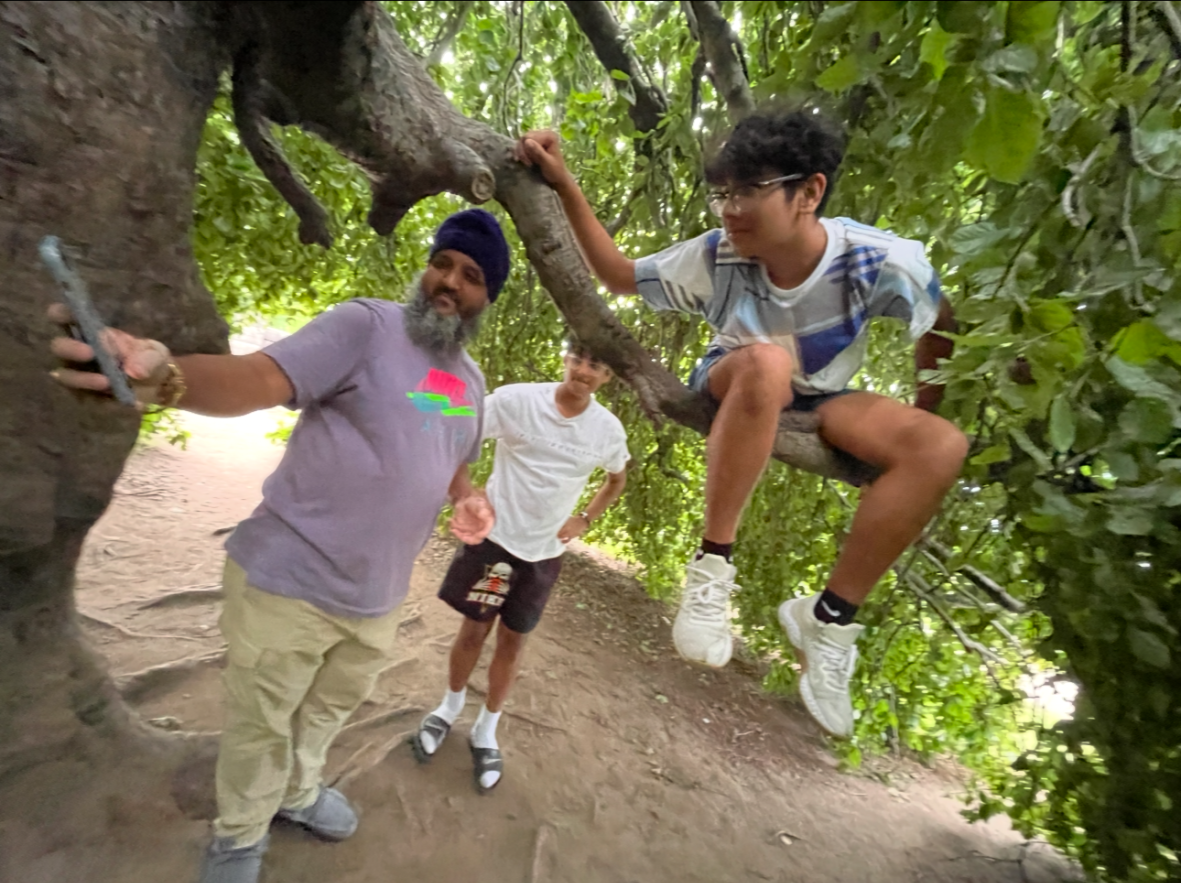
Aside from school and the one truncated football game, Kirat rarely leaves the house, living what he describes as “the same day every day. I wake up, shower, do morning prayers, go to school, and come home. I sit for an hour — doing whatever to pass the time — and then go to the basement, work out, shower, do chores, eat, sit with my mom, do my homework, and go to bed.”
But sleep does not come easily; all he is thinking about is his dad. The few times where he dreams that they were reunited are even more difficult: “I wake up and realize he’s not here; it’s hard to get out of bed or do anything.”
Kirat used to get rest before virtual court hearings but, over five months, that has changed. “The lawyer tells us something positive and we get excited that he’s gonna be out,” he says. “But then the judges keep pushing everything back. They don’t understand that they’re splitting up families. We get a little bit of hope and then it’s all crushed.”
In adolescence, our sense of identity, agency, and personal boundaries are still forming; we are people still becoming, shaped by life circumstances and the people we love. More than his friends or other family, Kirat’s constant companion was his dad, and that paternal support is what he now longs for. “I feel like a father is the only man in the world that wants you to be better than himself,” he says. “But that man, for me, is locked up right now. I don’t have the only support that I really want. I am fighting every single day to just get through the day.”
“The Kids Had To Walk a Little Tightrope …”
Arun Chauhan was sitting in his statistics lecture at the University of Central Florida when his phone lit up. “UCF Police,” the caller ID said. His heart began to pound.
Two months earlier, during what was supposed to be a routine check-in, ICE detained his father, Harpinder. They sent him first to Krome North Processing Center in Miami — a facility one detainee described as “hell on Earth” — then, due to overcrowding, on to FDC Miami federal prison, and finally to Broward Transitional Center (BTC) in Pompano Beach, forcing the family into an unprecedented emotional, legal, and financial tailspin. The university had recently contracted with ICE, resulting in abrupt terminations of student visas and rising fears of detention. For Arun, a scholarship student under his parents’ work visas, no public space felt safe.
When Arun returned the call, the officer told him to come to his vehicle. “There’s something wrong,” the officer said. Arun called his mother, Rani, who had been reluctant to let her teenage son drive alone since her husband’s detention. “Police just asked me to come see them at the car,” he said. “I think, this is it.”
Rani told him to hang up and call the lawyer. She had already been preparing him, he would later recall. If it happens, surrender. Don’t fight. Don’t end up in detention. Go back to England.
Arun called the lawyer’s office. “Stay on the phone with me,” he said. “I think it’s happening right now.” For months, his mother had been quizzing him randomly on the lawyer’s number, just so they’d have it ready. He had watched the YouTube videos, the public service announcements about what to do when ICE comes for you. Don’t say anything. Ask to speak to your attorney.
The five-minute walk felt interminable. Since his father’s detention, he’d learned to live in a constant state of readiness. His phone was always on. His mind never fully focused on schoolwork, trying to support his mom at work and keep his father’s spirits lifted from afar. There was no time for extracurriculars or friends. Just a steady focus on getting through the day.
He saw the UCF police pickup truck and, next to his vehicle, a fellow student in tears. She had been backing into a parking spot and hit the car. A fender bender. Arun felt relief so profound he didn’t check for damage. “Everything’s fine,” he told her. “Don’t worry about it.”
But everything was not fine. The emotional toll of living under rapidly evolving and expanding immigration policies has had a profound impact. The Urban Institute report “Facing Our Future: Children in the Aftermath of Immigration Enforcement” found that most children and adolescents experienced at least four adverse behavioral changes in the six months following a raid or arrest, including increased crying and fear, changes in eating or sleeping habits, and heightened anxiety, withdrawal, or aggression compared to the previous six months.
Although Arun experienced a false alarm, his response was not irrational. It was grounded in his lived reality: His father remained in detention, the family’s future remained uncertain. They were on guard because history had shown they had to be.
On Easter Sunday, Arun, his sister, Jasbir, and their mother finally allowed themselves to sleep in. Then came a text from a relative of his father’s cellmate. Harpinder had left the BTC detention in an ambulance.
The Xylom is an independent nonprofit. We have no owners or shareholders, no corporate interests, and no government contracts. We have no paywalls. Everything we publish is free. Join our community of members and cancel anytime.
The siblings grabbed their phones. BTC refused to tell them where their father had been taken, so they called every hospital in the vicinity. Intervening on their dad’s behalf was something they had been doing for years, a role reversal that mental health professionals call “parentification.” It is a compression of childhood that occurs “when youth are forced to assume developmentally inappropriate parent- or adult-like roles and responsibilities,” a research team reported. Parentified children and adolescents “are expected to become pseudo-parents and pseudo-adults long before they are cognitively and physiologically equipped for these roles,” researchers added.
“The kids have gone through so much,” Harpinder later said from England. “They had to walk a little tightrope: keeping their mother sane and keeping me sane. Arun went from being quite childlike to being more adult than anyone within just a few months.”
Dr. Razia Kosi, a Maryland-based child psychologist working with South Asian communities, explains that the phenomenon varies by generation. “Depending on whether they’re first, second, or third generation, we see different layers of engagement,” she says. The depth of parentification also depends on what she describes as “parents’ sense of belonging: where they feel they land in the whole process of acculturation.” These factors inform both how many adult responsibilities children take on and the extent to which they feel the need to navigate both Asian and American cultures and intervene on their parents’ behalf. While parentification has been shown to increase self-reliance, improve coping skills, and foster growth, it has also been correlated with increased rates of depression, anxiety, addiction, and poor physical outcomes.
The children did not know their father had collapsed in ICE detention showing signs of cardiac arrest after being deprived of insulin for nearly a week.
“Do detainees from Broward Transitional come to you guys?” Arun asked the first hospital he called. The response: “I have no idea.” The siblings kept searching. They did not yet know their father had collapsed in the dinner line at BTC, showing signs of cardiac arrest after being deprived of insulin for nearly a week (part of a larger, horrific pattern of neglect and abuse their father had experienced in ICE detention).
The next morning, Arun’s sister and mom headed to work. They had no choice. They had to keep the shipping store — their only source of income — running, shrugging off customers like the one who sneered, “How’s Trump’s America treating you?” A 2020 survey of 125 long-term resident households in Pima County, Arizona, determined immigration arrests cost a household, on average, more than $24,000. Deportation of an immediate family member resulted in an average annual income decline of more than $19,000 for noncitizen and mixed-status households alike.
Arun was meant to be studying, but instead made repeated calls to every hospital near BTC, plus the sheriff’s department and detention facility itself. “I was going crazy,” he says.
“Children are so attuned to risks facing their parents or family structure,” Dr. Nguy explains. “They pick up on anxieties and financial insecurity, and that gets reflected in their own internalized struggles.”
Later that day, a nurse confirmed Harpinder was there, in the very first facility they had contacted the day before. But he was listed under a pseudonym, his real name in brackets.
“The only time we will alert you,” the official said, “is if your father dies.“
Shortly after, Arun called back and asked for his father under the assumed name. The nurse immediately hung up. He called again. A hospital supervisor told Arun he could not share information because the patient was in ICE custody: “Information is confidential.” He called BTC in hopes of getting some word that his dad was okay. “The only time we will alert you,” the official told him, “is if your father dies.”
For nearly three days, the family was anxious and fearful, barely eating or sleeping, not knowing that Harpinder had stabilized but was still under observation. Only when the online ICE locator showed that Harpinder was back in detention did they think he was okay. A cell, they reasoned, was better than a hospital. Relief washed over them.
But that same day, Arun — the family’s liaison to their attorney — received an update. “Please see the attachment,” the lawyer emailed just before the end of the workday, “and call me tomorrow to discuss.” Arun was the first to learn a motion to reconsider in his father’s case had been denied and he would be deported. Arun had to break the news to the rest of his family, including his dad.
“The ICEman Took Him”
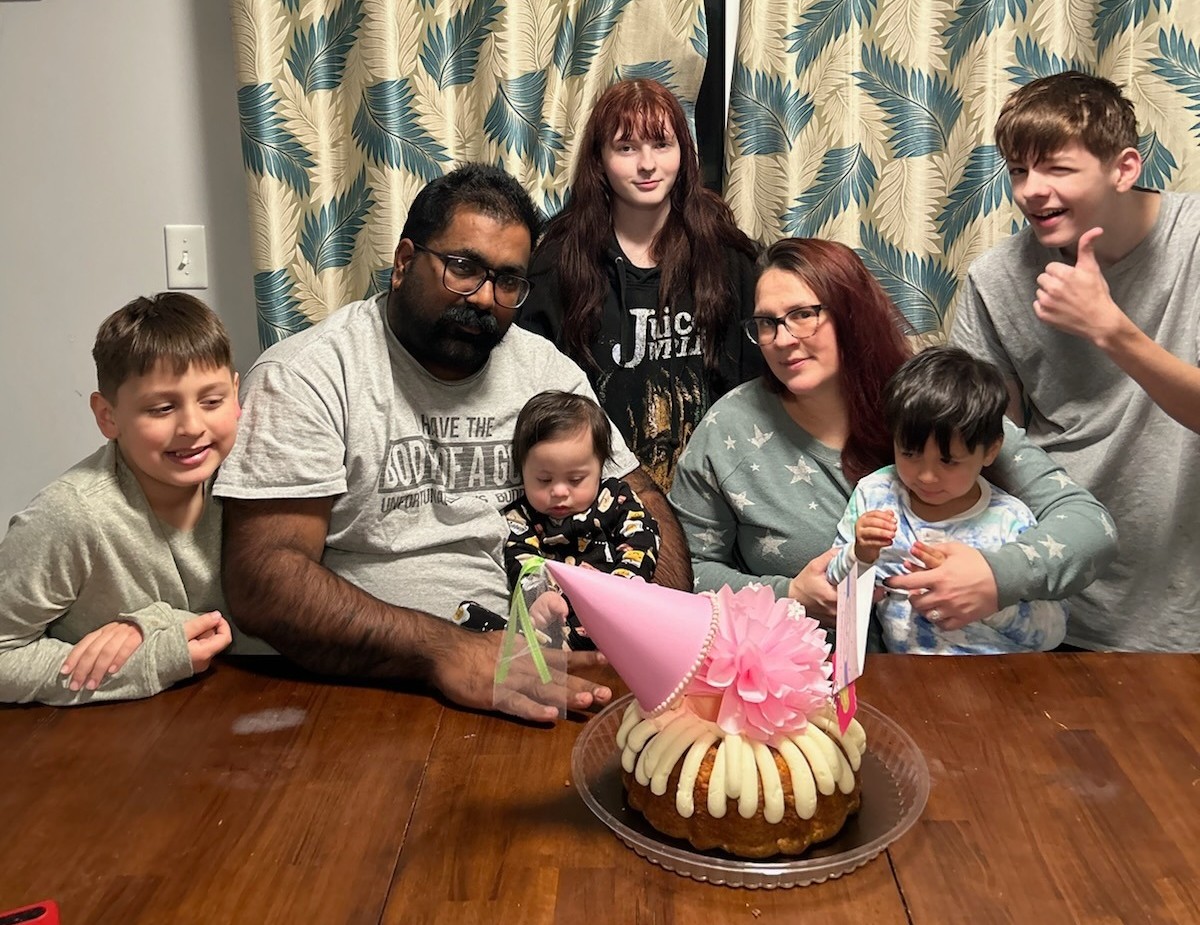
Last May, Jaswinder Singh and his wife Ruby, a U.S.-born citizen, brought all six of their children to what should have been a celebratory meeting: Jaswinder’s interview with U.S. Customs and Immigration Services for his permanent residency (“green”) card. Theirs was a modern-day love affair. The couple met as neighbors and Jaswinder fell in love with not only Ruby but her four children from previous relationships. The couple eventually got married and went on to have two more children together. All, Ruby says with affection, are “deeply loved.”
As they passed through the metal detectors, a police officer yelled, “ICE is here.” Ruby felt her chest tighten. She turned to her husband — nicknamed Lucky — and said, “ICE is here.” He squeezed her hand reassuringly. “Don’t worry. I’ve been through this before. It’s going to be okay.”
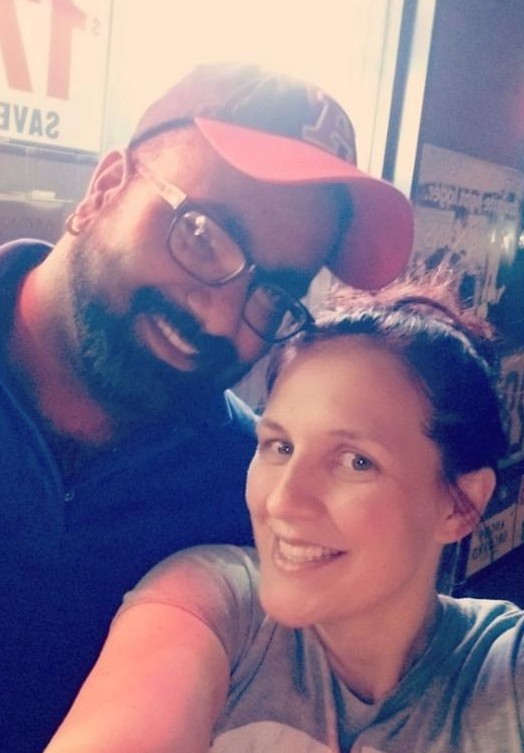
After waiting for her husband for what “seemed like forever,” an officer appeared and asked if he could take Ruby, alone, into a back room. She refused to leave their children, so he led all of them down a long, narrow hallway. “I kept looking and looking for him, with each room that we passed. I didn’t see him,” she said. “And I felt so lost.”
Finally, the officer told her that her husband had been detained.
The Department of Homeland Security claims 70% of ICE arrests have been of “criminal illegal aliens,” but the evidence collected by Syracuse University’s Transactional Records Access Clearinghouse does not support it. The number of non-criminal detainees arrested by ICE has surged by 2,000% under Trump. According to recent reporting,73% of those detained have no criminal convictions; only 5% have violent convictions. Jaswinder says he has never even had a speeding ticket.
The Xylom's independent, human-powered reporting will never be put behind a paywall, thanks to the support of readers like you. Please make a tax-deductible donation now to keep our newsroom going.
“We aren’t a fake family, and he isn’t a criminal,” Ruby said to the officer. “I know,” he replied. “I am so sorry.”
Outside the office, Ruby’s thoughts turned to the children. Tara, Trevor, and Karan — all in their late teens — understood what had happened. But she hoped the younger kids would be spared. She took them to Target, hoping the toys would distract 5-year-old Will. “But something clicked,” she says, “and he figured it out.” So, she piled everyone back into the car and drove to Chick-fil-A, her 10-year-old son Neel’s favorite. But there in the back seat, he dissolved into tears. “He mentally broke down and said, “I don’t understand why they took Lucky. He is not a bad person. I miss him so much.” A month later when Ruby took Trevor, nearly 16, to get ice cream, he also succumbed to tears. “I just want him to come home,” he told her.
Separating a child from their parent is “an incredibly severe trauma,” Dr. Martin Teicher, associate professor of psychiatry at Harvard Medical School, explained in a recent interview with me. He has spent decades studying the ways adverse childhood experiences, including immigration trauma, reshape developing brains.
Trauma, he said, disrupts the brain development of all children. It presents most strongly in the amygdala, an almond-shaped cluster of cells nestled in the mid-brain that serves as the brain’s alarm system, interpreting sensory information and initiating fear responses. But the way trauma impacts the amygdala differs dramatically according to age. For older children, the amygdala can become hyperreactive to threat, priming them for fight-or-flight responses. In younger children who do not have the ability to fight or flee, the response gets derailed. Their developing brains adapt by treating harmless everyday occurrences as dangers while simultaneously failing to recognize genuine threats.
Trauma can also weaken the connection between the amygdala and prefrontal cortex, brain structures that work together to detect threats, manage emotions, and guide decision-making. Children with disrupted circuitry between these regions struggle to regulate their anger, control their impulses, and maintain the kind of mental flexibility that allows them to hold information or sustain attention.
Will, who recently started kindergarten, is “a lost soul,” Ruby says. “When people ask him where his daddy is, he says, ‘the ICEman took him.’”
The sadness and disassociation Ruby has witnessed isn’t just momentary emotional distress. At 5 years old, he is in a developmental window when specific brain regions are most vulnerable to the effects of trauma.
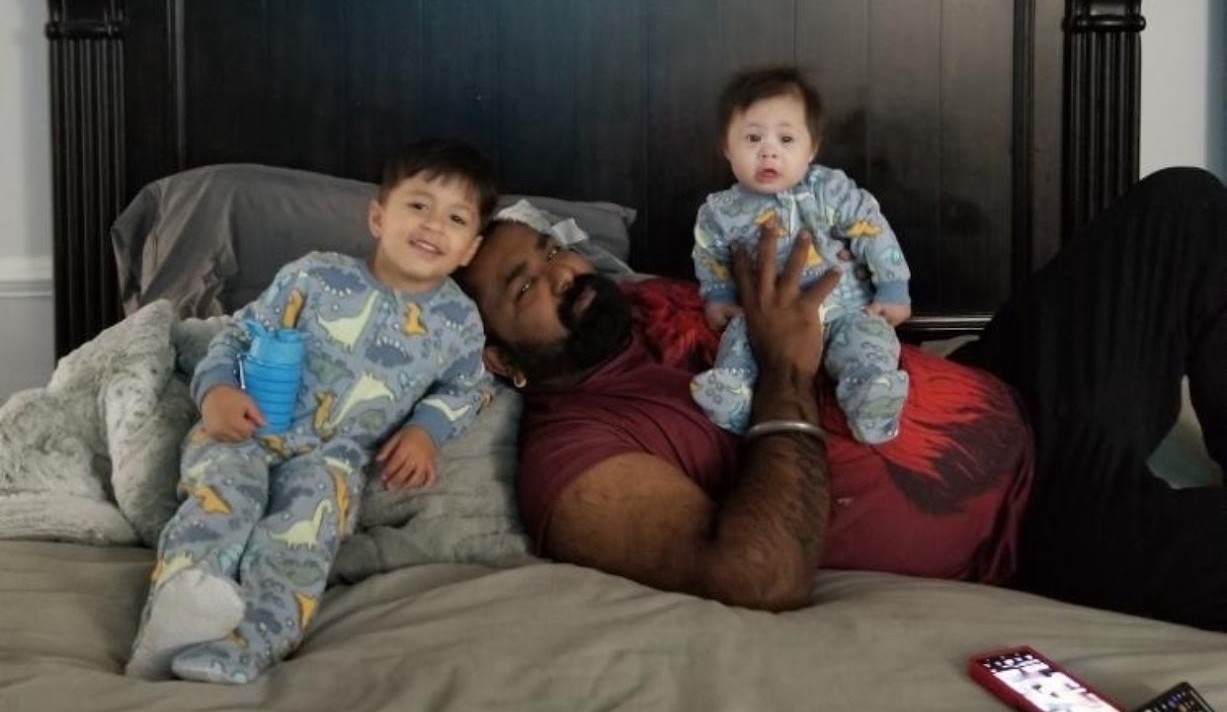
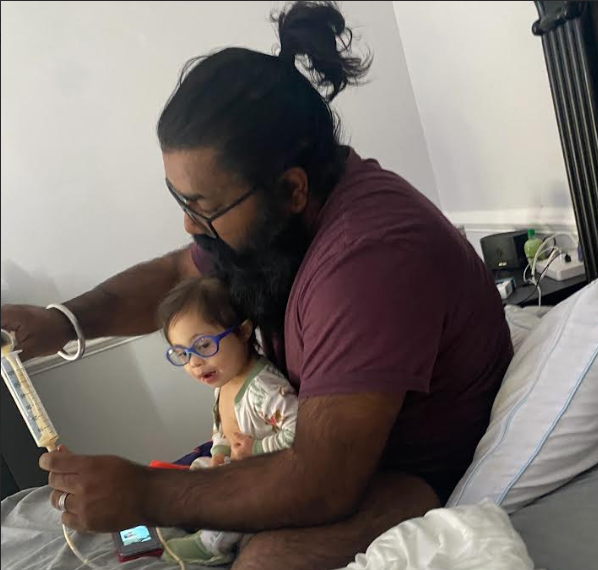
Yet it’s Jasdeep — their youngest — whose situation highlights the particular cruelty of this separation. Born with a trisomy (a genetic condition in which a person is born with an extra chromosome), pulmonary hypertension, and a hole in his heart, Jasdeep can’t eat or drink by mouth— everything goes through a feeding tube directly into his stomach. This year, he was also diagnosed with autism. Jaswinder had been to every medical appointment, knew every doctor, and handled the complicated feeding routine, Ruby said. “The doctors would always say, ‘Oh, he’s a great dad. He helps with everything.'”
At a recent appointment, the pulmonologist asked why Jaswinder was not there. When Ruby explained, the doctor started to cry. “The kids are sitting here saying, ‘Please give him back to us’ and this doctor’s literally sitting there crying,” Ruby said. “And I just don’t understand how any of this is okay.”
These days, when Ruby asks Will what’s wrong, he just shrugs and says he misses his dad. But when she asks if he wants to go get his dad, he says he doesn’t know. “He wonders,” she says, “‘are you gonna actually give him back to us, or are you gonna just take him again?’” This tracks with what researchers describe as “ambiguous loss.”
The absence, detailed in a 2024 study, puts children in emotional limbo. Unlike death or traditional incarceration, immigration detention offers no timeline, no endpoint. The uncertainty exacerbates anxiety, leaving children with unresolved grief.
The separation heightens their vulnerability to depression and post-traumatic stress and compromises their ability to self-soothe, trust others, and establish a foundation for healthy relationships.
While the children navigate neurological and psychological upheaval, Ruby faces her own impossible challenge. As the caregiver left behind, managing six children on her own, she bears what Columbia University sociologist Yao Lu and her colleagues describe as “the social and emotional costs of family reorganization.” The increased physical and psychological burdens on sole caregivers can increase stress, reduce the amount of time they can devote to their kids, and may contribute to children’s distress.
“Under these challenges,” the researchers write, “remaining caregivers may show lower levels of warmth and support and may be more punitive in their interactions.” At the same time, they add, “Young children are likely to interpret separation from parents as a complete loss of (the absent parent’s) love and protection.”
Will used to proudly wear the traditional Sikh head coverings his grandfather sent from India, but now he refuses. When his older brother tried to hype him up — ”It’s so cool, you wanna wear it?” — the 5-year-old said he was too scared. That fear reflects a threat-detection system working overtime and is not unfounded. A 2017 report, “Living in an Immigrant Family in America: How Fear and Toxic Stress are Affecting Daily Life, Well-Being, & Health” from the health policy organization KFF revealed a significant increase in discrimination, racism, and bullying of children of immigrants during Trump’s first term. A 2020 study of 179 children in the 6th and 9th grades found that while all participants thought bullying was wrong, non-immigrant adolescents objected less when the victim of bullying was an immigrant. Will’s older brother Neel now asks, “Mom, are they gonna come get us because we’re brown?”
The Xylom's reporting is supported by hundreds of readers like you. Becoming an annual or monthly member is the best way to help us maintain a steady source of revenue that supports investigations that span months, if not years. Cancel anytime.
Jaswinder has missed Will’s first day of kindergarten and his birthday. He missed Father’s Day, Neel’s birthday, and Halloween. He missed Jasdeep’s birthday — his “Santa baby” born on Christmas Day. And he’ll miss Tara and Karan’s graduations. Both kids graduated early. They had wanted their adoptive father to be there.
“The impact of forced separation by the Trump administration will not end when children and parents are reunited,” Dr. Teicher wrote in a 2018 commentary. “Many will live in fear that this will happen again.” And the consequences, he says, will still be playing out “20 years from now.”
After six months in detention, Jaswinder was deported. He describes himself as feeling as devastated and lost as his children, unsure when he will see his family again, or how things will be when he does.
MindSite News contributor Simran Sethi is a media fellow at the Nova Institute for Health, which provided financial support for this series. If you or your loved ones are impacted by current immigration policies, these guides on family preparedness and ICE encounters may help.